Audrey McKnight
Co-founder and CTO of Feya. Senior at NYU majoring in Computer Science and Philosophy, with minors in Math and Japanese.
Tap a stage to jump there
NYU finish
Feya
David and Illya brought me a problem: they wanted a compute network with its own unit of exchange, but how do you get a network of average devices to do valuable AI work? My answer was pipeline parallelism over the public internet: split a large model's layers into consecutive slices, put each slice on a different device, and pass the activations from one device to the next, so models too big for any one machine still run on ordinary ones.
I coded the entire functional app end to end, model splitting included. On the business side I pitched Feya at the Solana office in San Francisco and made the Solana relationship that landed our first compute partnership.
“Most people's economic stake in AI is their job, which is exactly the asset AI devalues. So how do we give people a stake in the future?”


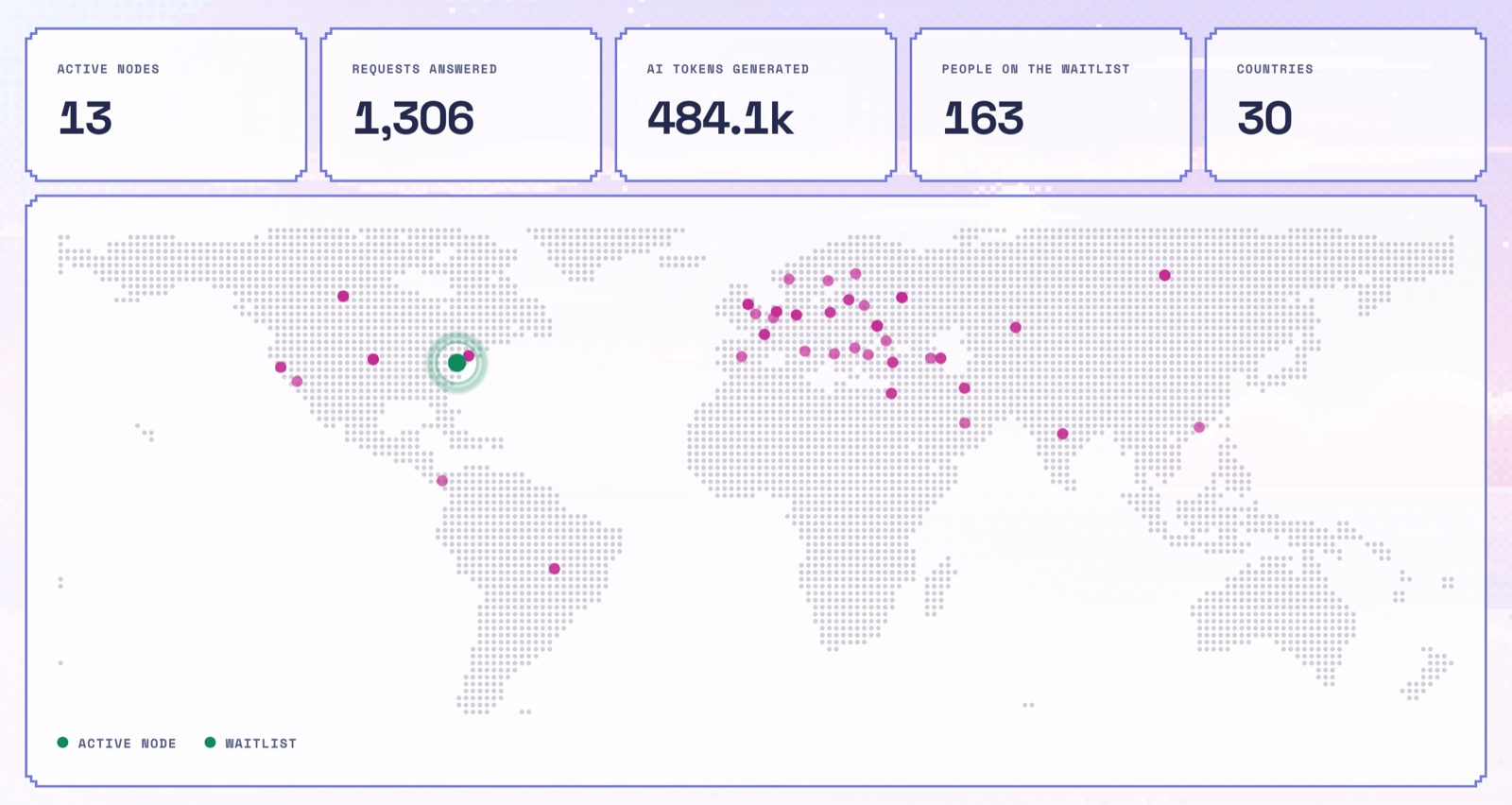
Does it actually work?

Public docs: which models need several Macs · Three steps · Live network · Safety · FAQ
Launchpad
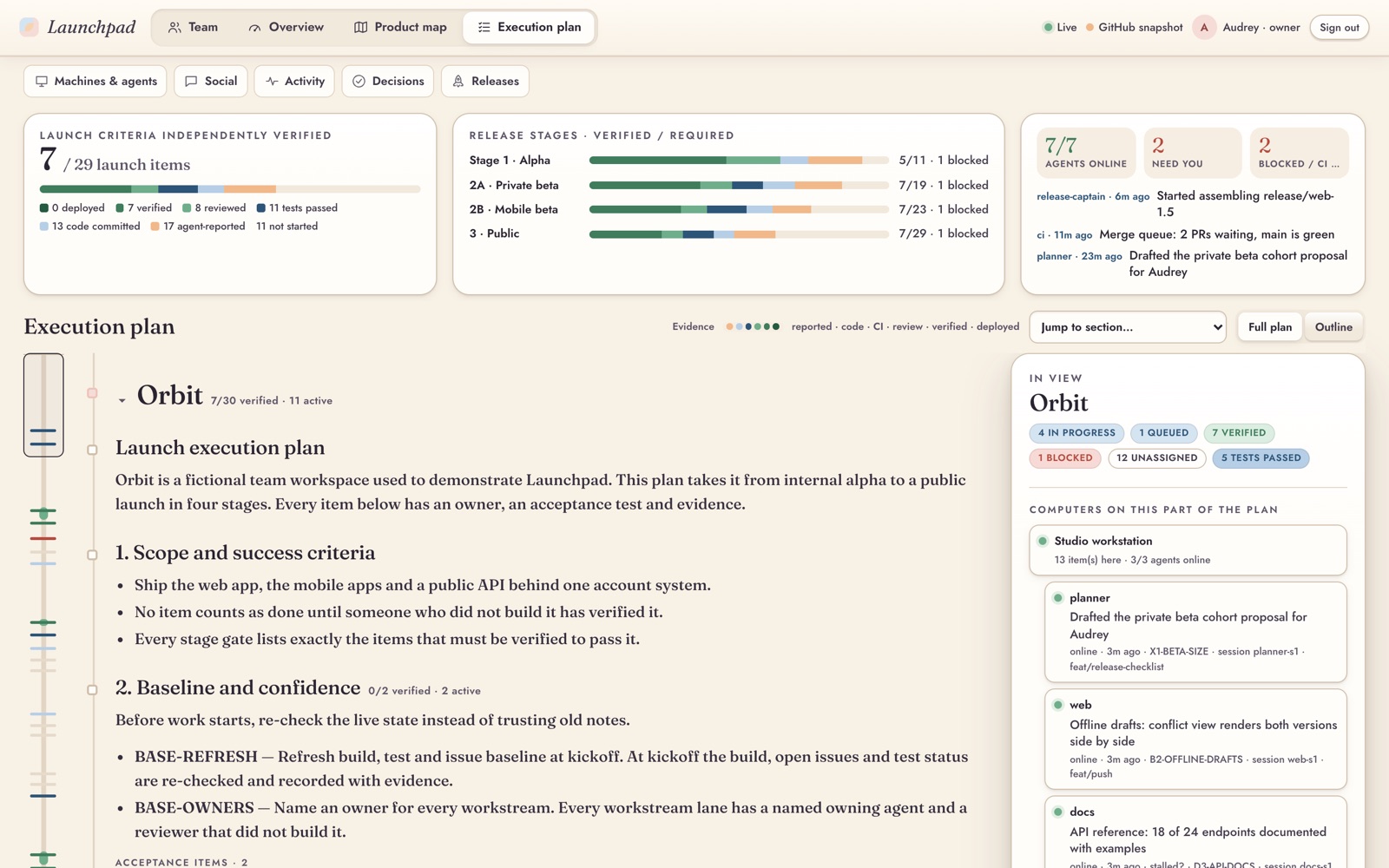
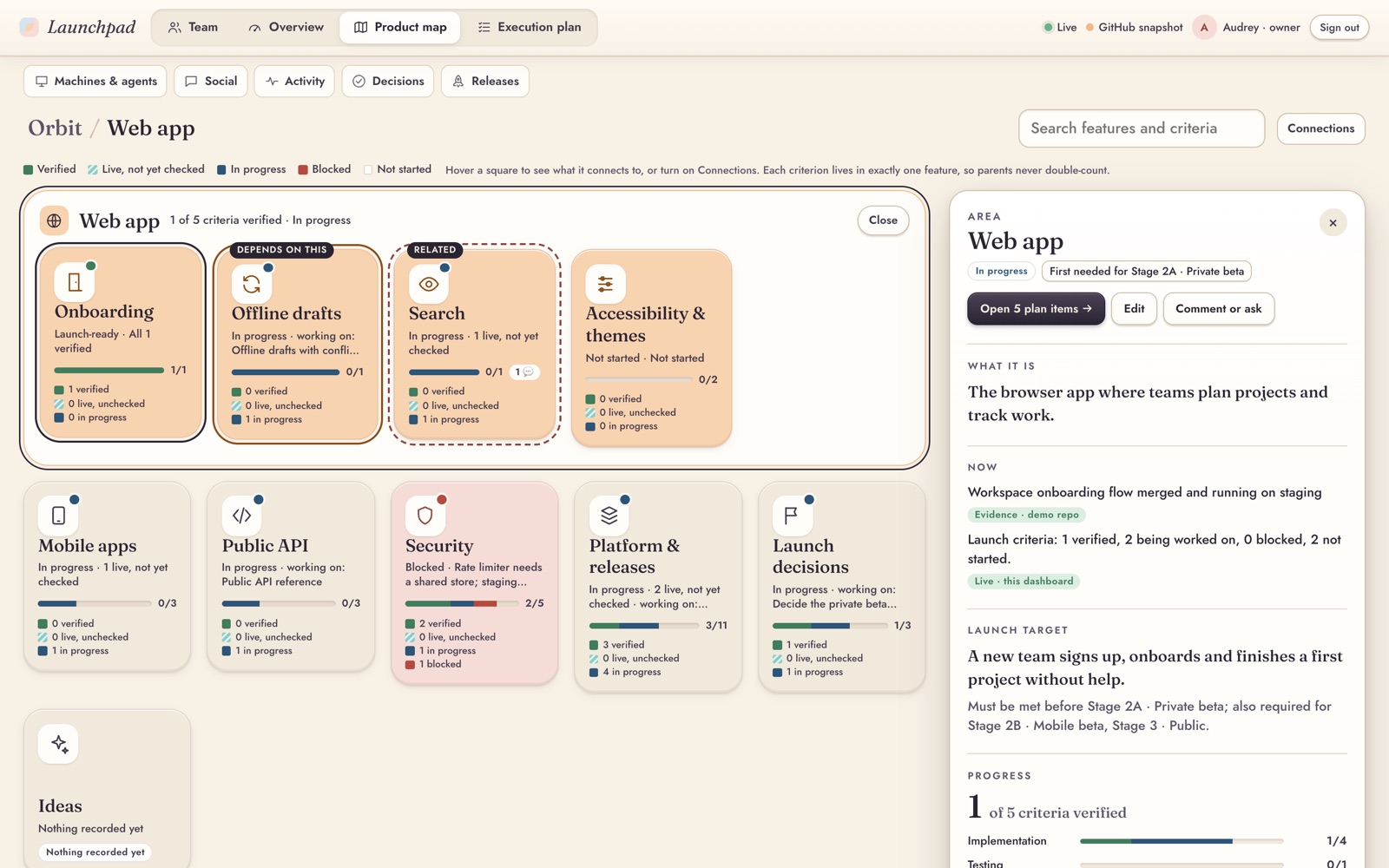
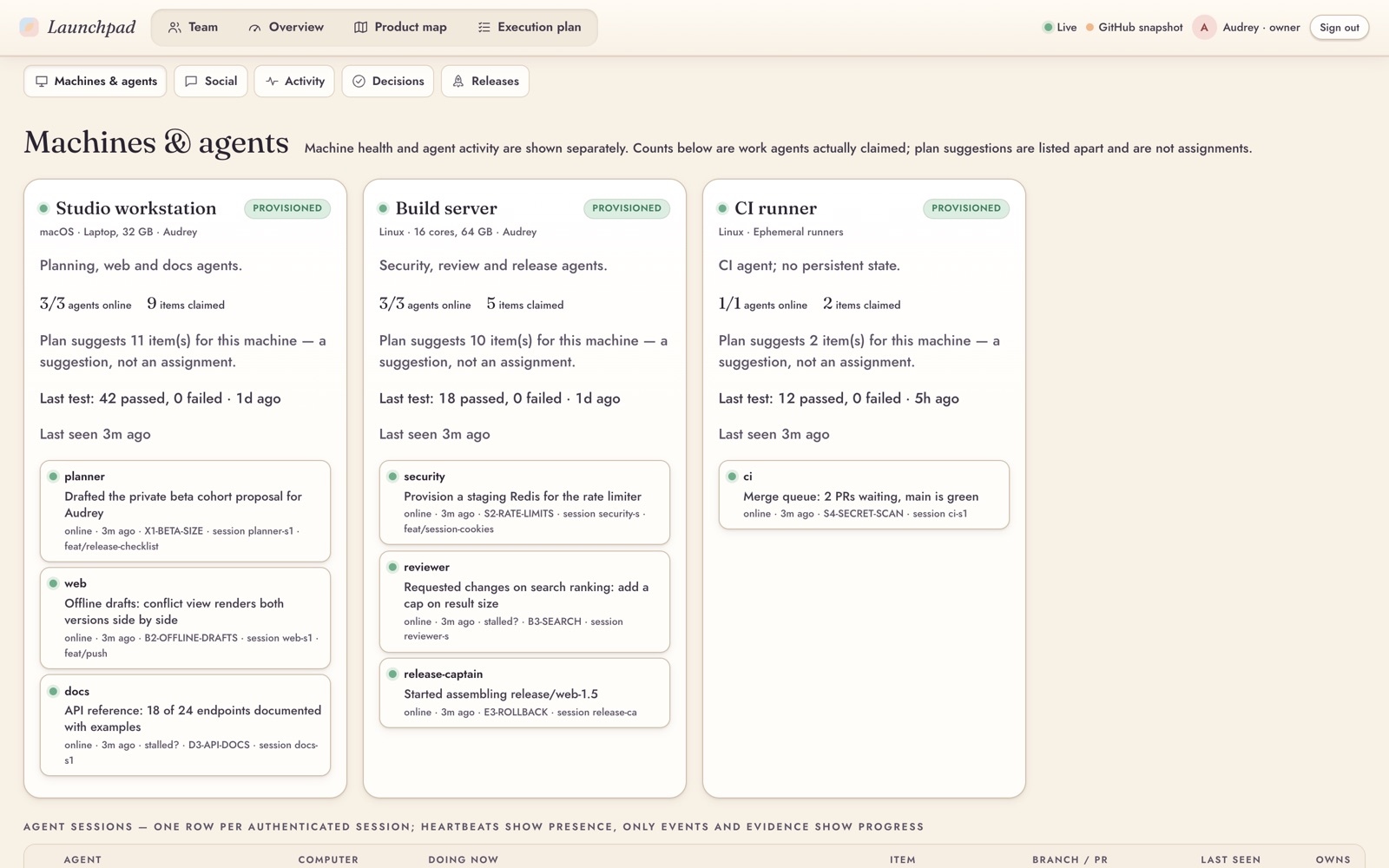
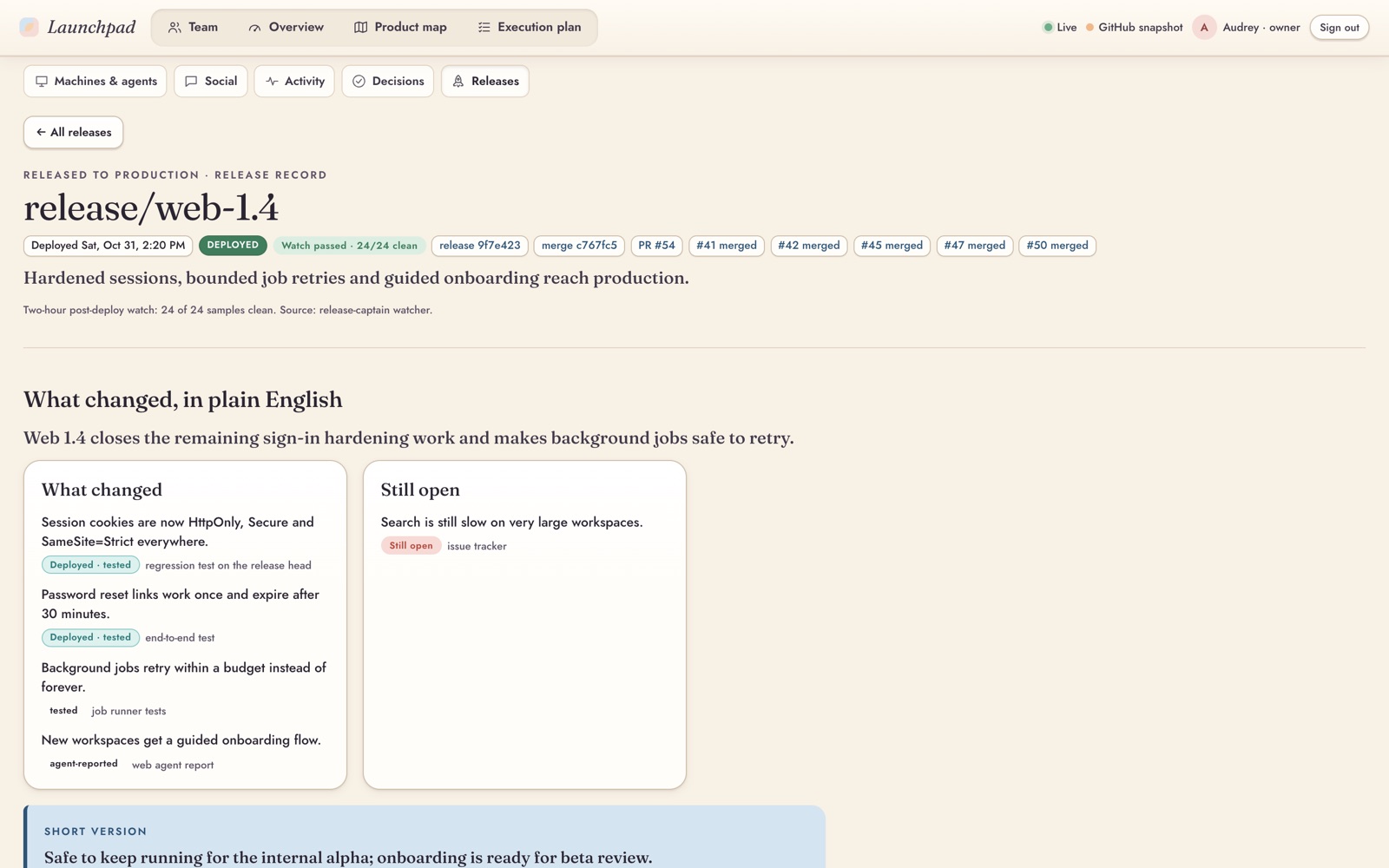
Mission control for launching a product with a team of AI coding agents. I ran Feya's launch with a fleet of Claude Code agents working in parallel, each owning one lane (security, web, releases, review, CI), and built Launchpad so they could coordinate and I could steer. It shows the whole launch plan with live status on every item, which agent on which machine is doing what, the decisions waiting on me, and a release history written in plain English.
Its core rule is no unverified green: an item counts as done only after someone who didn't build it verifies it with evidence, kept separate from what agents report about their own work. It reads GitHub read-only; nothing in the dashboard can merge, deploy or run commands.
Whist
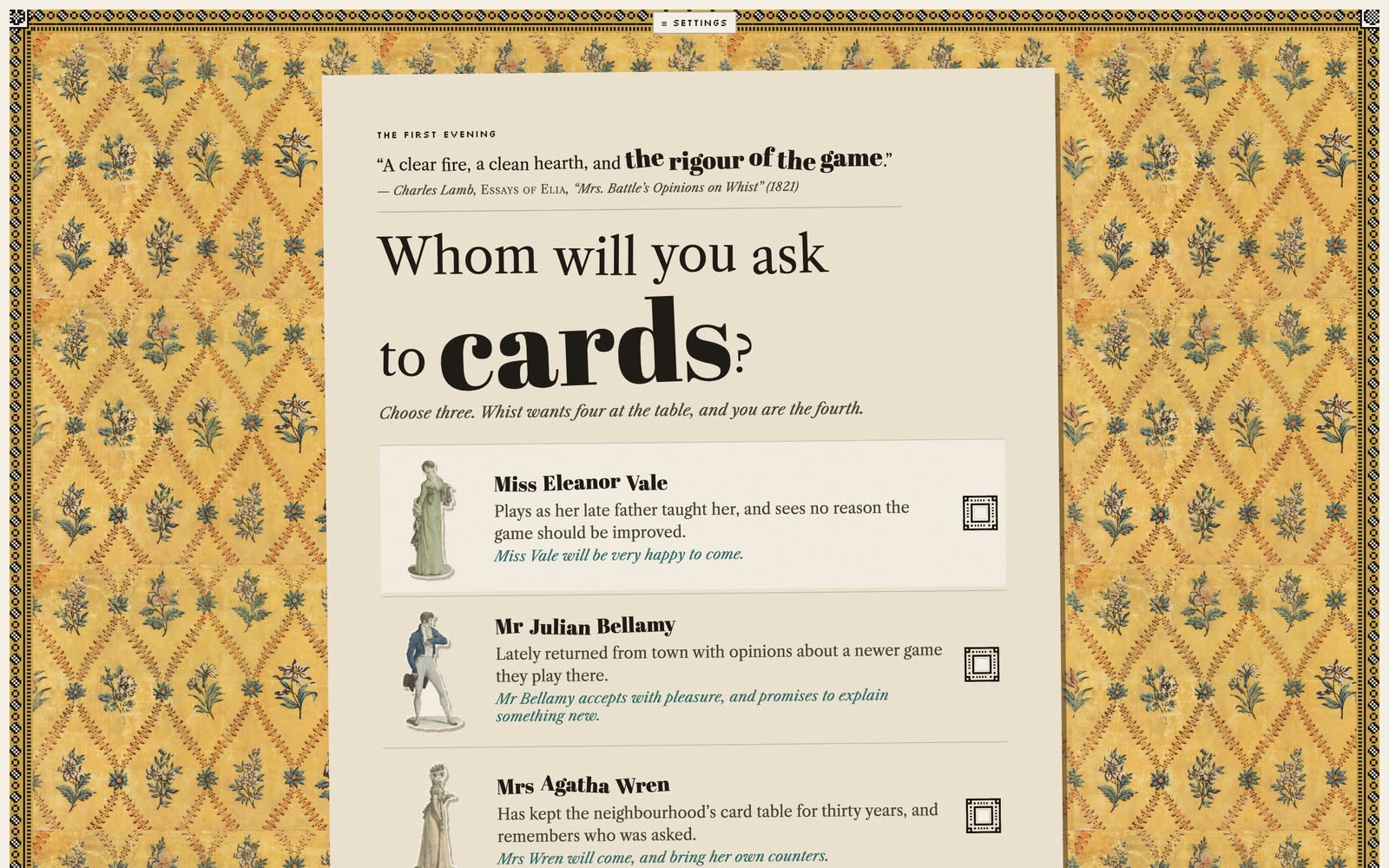
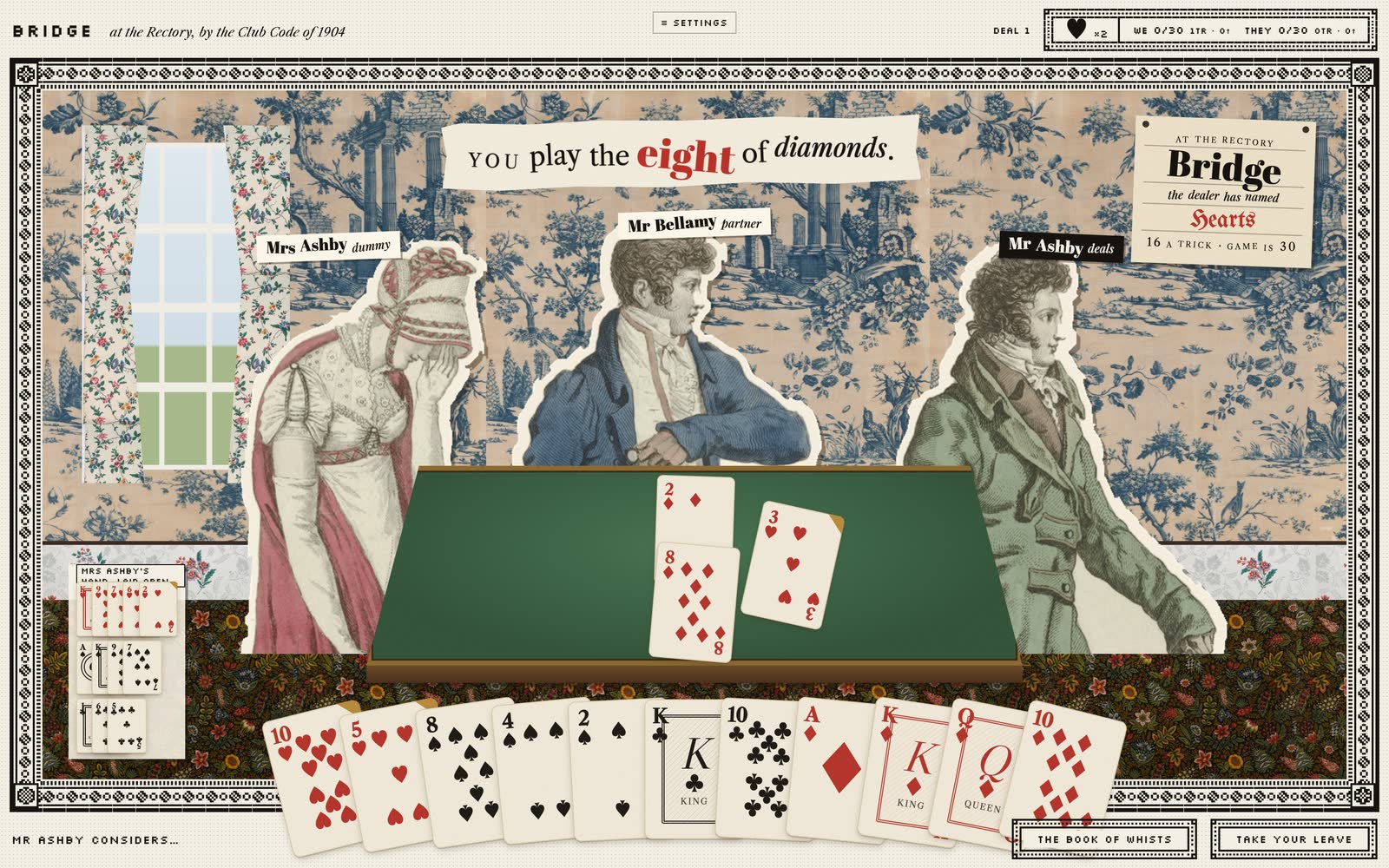
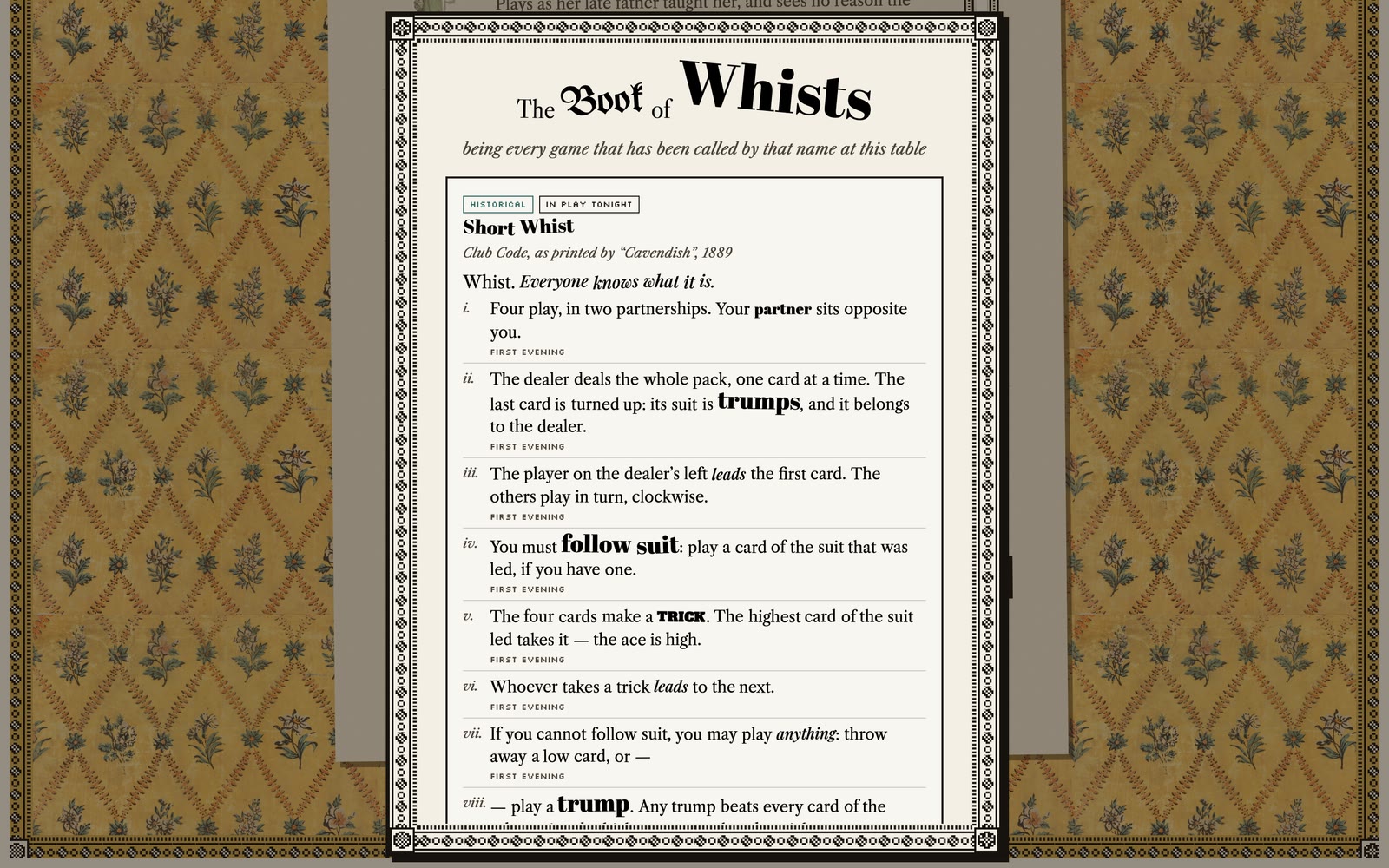
A game about how games evolve. Whist was the card game of the old novels, the one everyone was assumed to know, and within a few decades it was gone, overtaken by its own descendant, Bridge. Games compete for players the way species compete for a niche: a rule change like bidding spreads from one table to the next, and an older game survives only as long as people still choose to sit down to it.
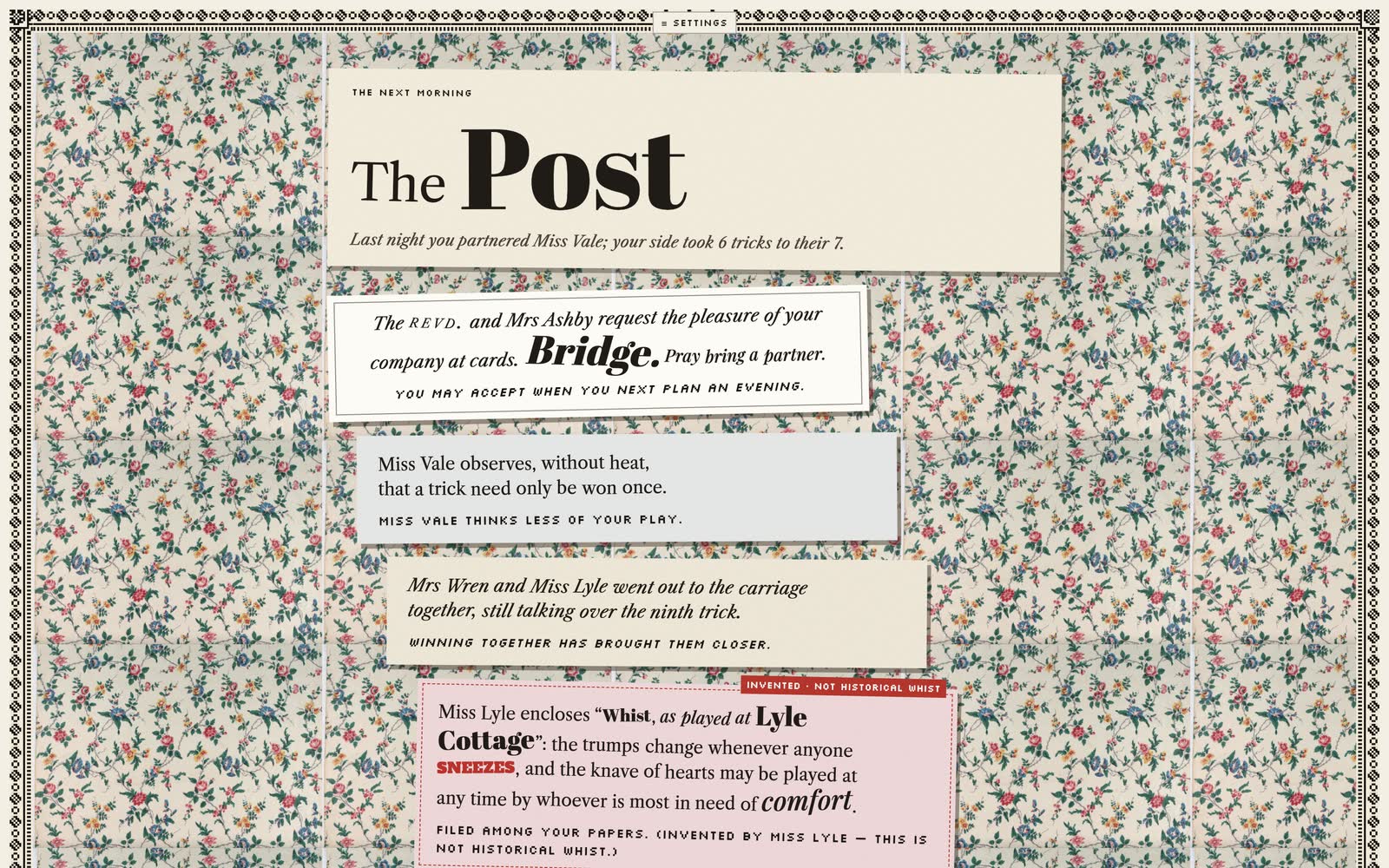
You play it from inside a neighbourhood. You host Whist evenings, choose who to invite and who partners you, and play real Whist by its 1889 Club Code. Across the lane the Rectory has taken up Bridge, and its invitations start arriving in your morning post. A "better" ruleset doesn't automatically win, though: the rules are arbitrary conventions, but the relationships built by people agreeing to them are real.
The idea goes back to when I was thirteen, reading novels where everyone played Whist and nobody explained it.
NYU start
Admitted as an Honors Scholar, a program built around research that took me to NYU's Florence and Buenos Aires campuses.
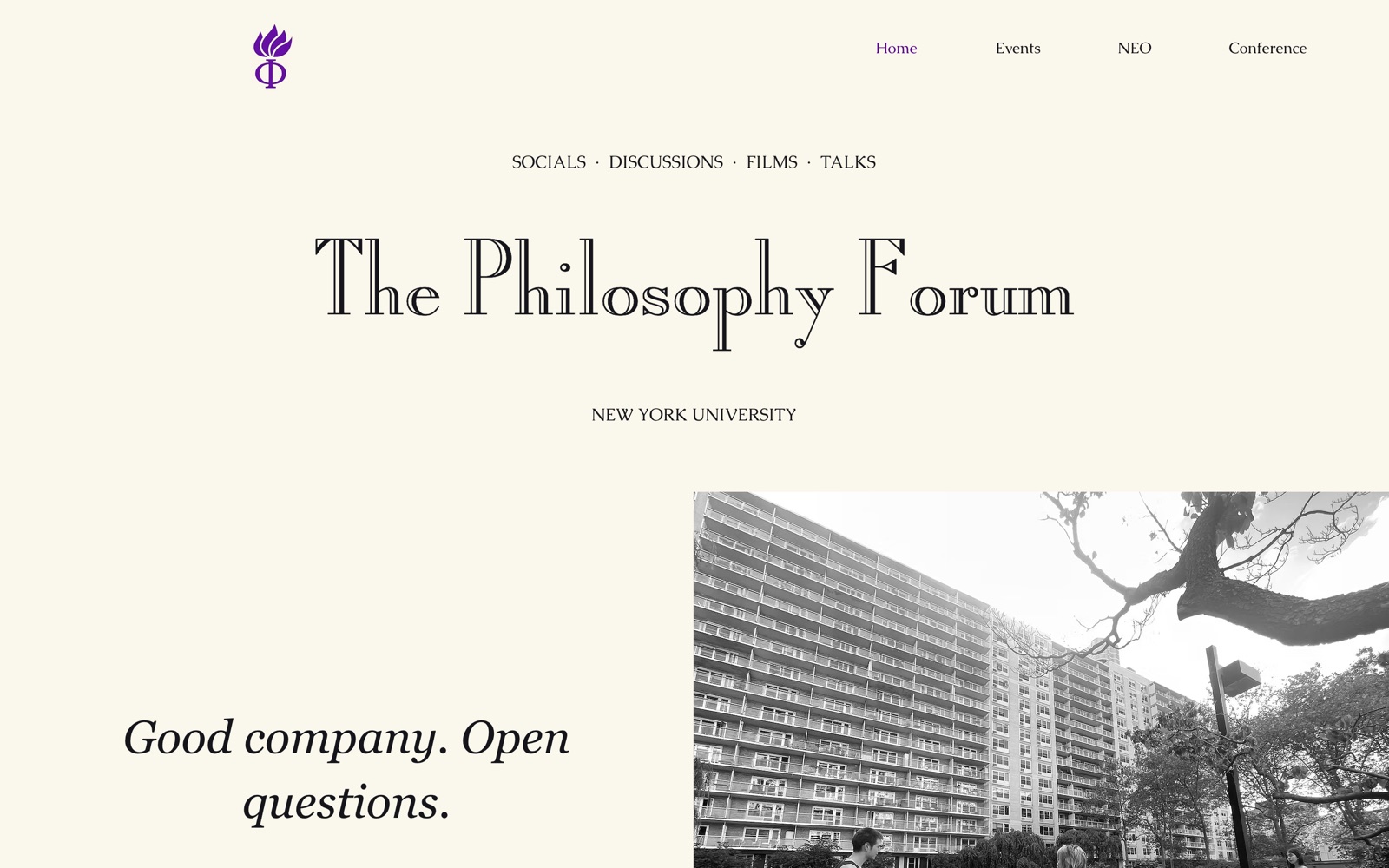
NYU Philosophy Forum
The Forum hosts the yearly undergraduate philosophy conference and publishes a yearly philosophy journal; past keynote speakers include David Chalmers, Thomas Nagel and Saul Kripke.
Cephalo
A search engine over 25,000 Semantic Scholar papers that benchmarks four retrieval methods against each other on a shared query set. Papers are represented as 64-dimensional hyperbolic embeddings in a Poincaré ball and reranked by hyperbolic distance.
Dox Sim Y3K
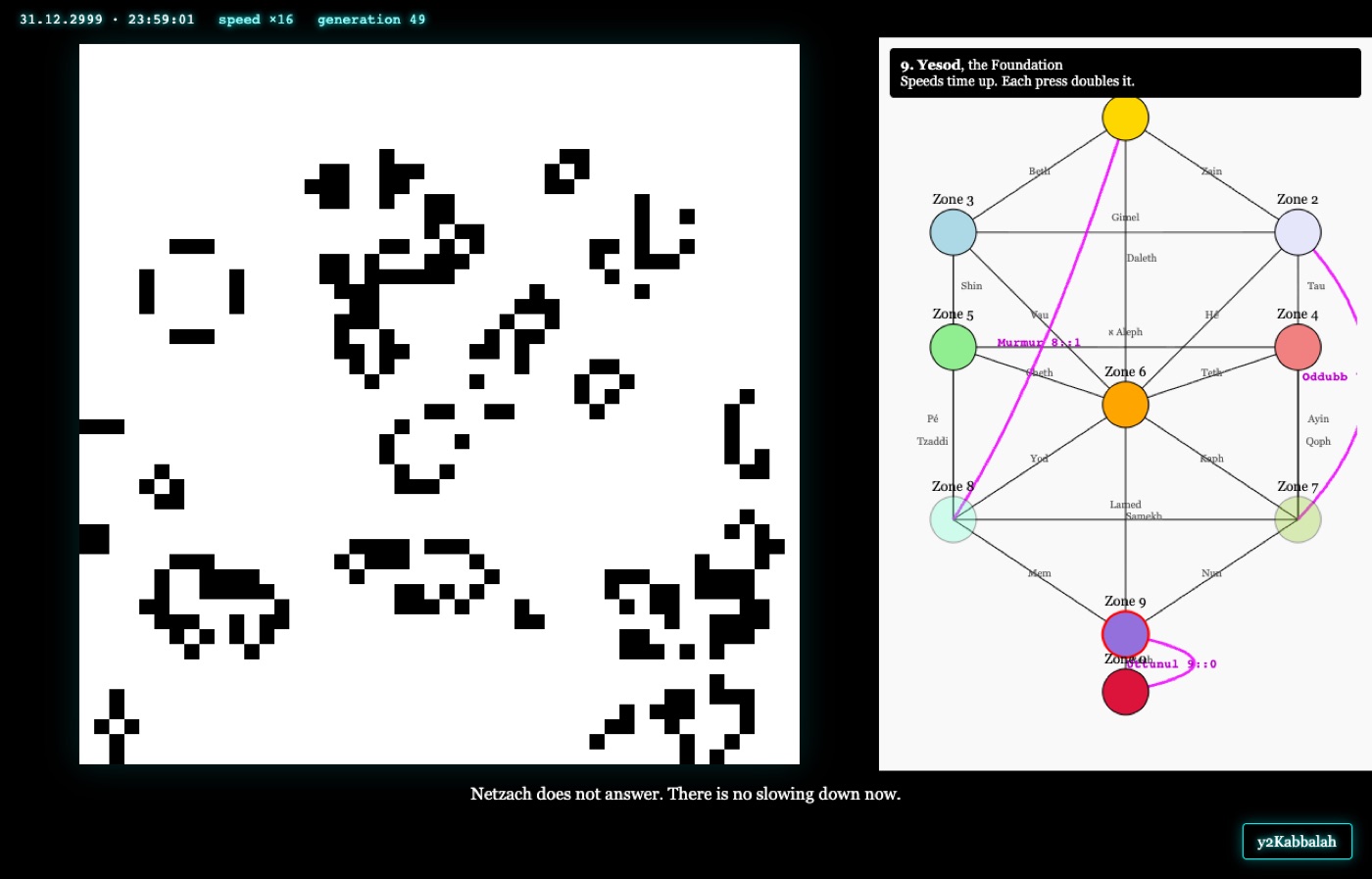
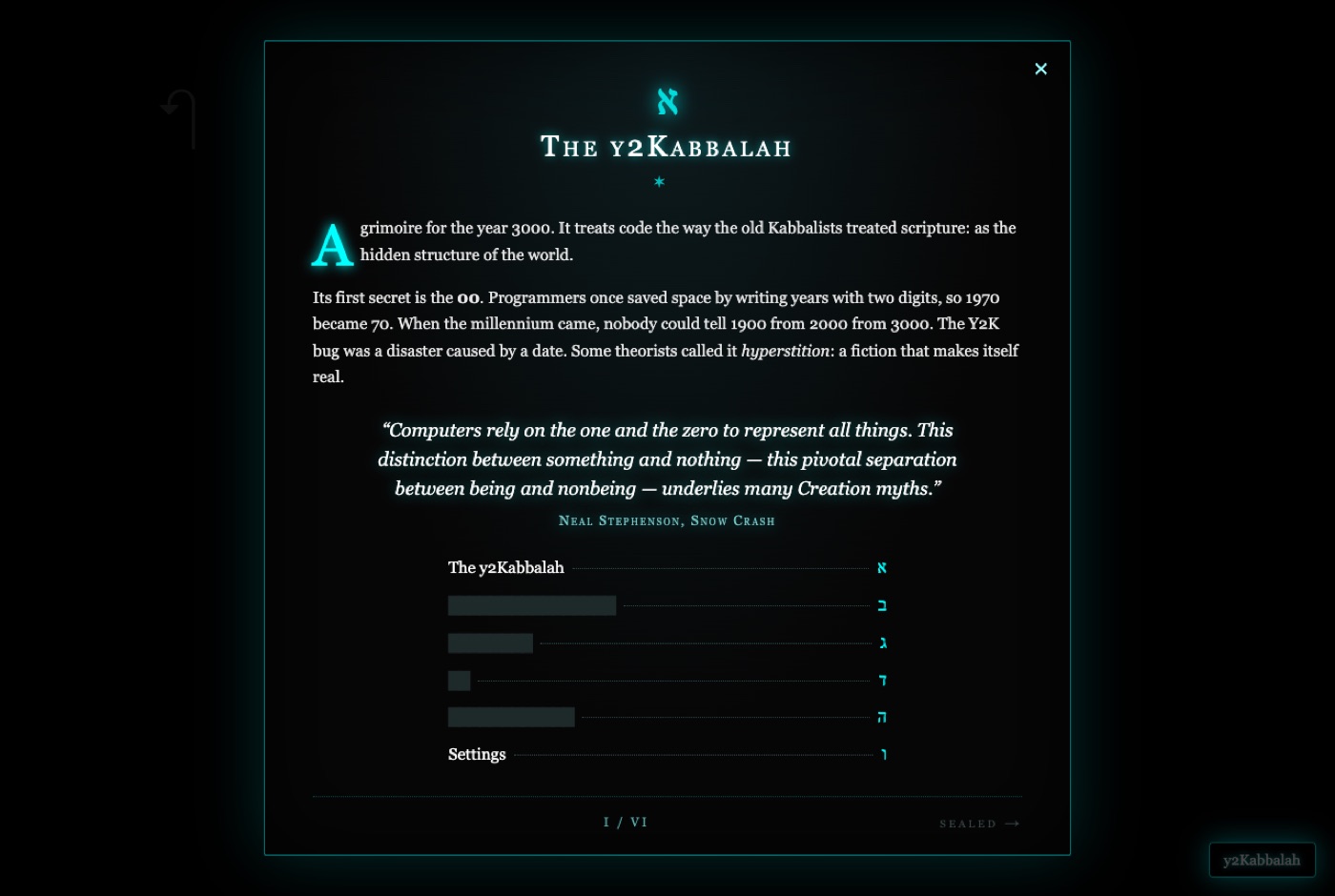
A text adventure in the style of '90s interactive fiction, set in the year 3000, where the ambiguous "00" of Y2K spiraled into hyperreality and birthed a new millennium of absurd late capitalism. You trade your last grains of soma for a grimoire, the y2Kabbalah, a Snow Crash-style metavirus that dissolves language into binary and drops you into the Kabbalistic Tree of Life wired to Conway's Game of Life.
Each sefira acts on the cellular automaton, and the grimoire teaches you to read it: Conway's rules, the CCRU's Anglossic Qabbala (type a word, and its number fires a sefira), and their Numogram. Chase speed through Yesod and the tree rewires itself into the Numogram's syzygies until the clock, like the Y2K bug, can only count to 00. It's a satire of the accelerationism the CCRU worshipped.
Play it · contains rapid flashing (there's a calm mode)
High school
- 3rd place nationally, National Japan Bowl, Level 3
- AIME qualifier, and a Certificate of Distinction for my AMC score
- Dual-enrolled by junior year: multivariable calculus and linear algebra at George Mason, computer science at Cornell
- Codefy mentor: taught a semester-long class on Java data structures to high and middle schoolers, plus one-on-one sessions
- Founded my school's NACLO club for computational linguistics
- Math Club vice president; Mu Alpha Theta math honor society
- Flute choir, six years (I was also 1st chair of the 1st section): toured Tuscany playing in churches across the region, performed with students at an Italian music school, and won an award for excellence at Universal Studios. I also arranged music for the choir; the scores are on the Music page.
Early work
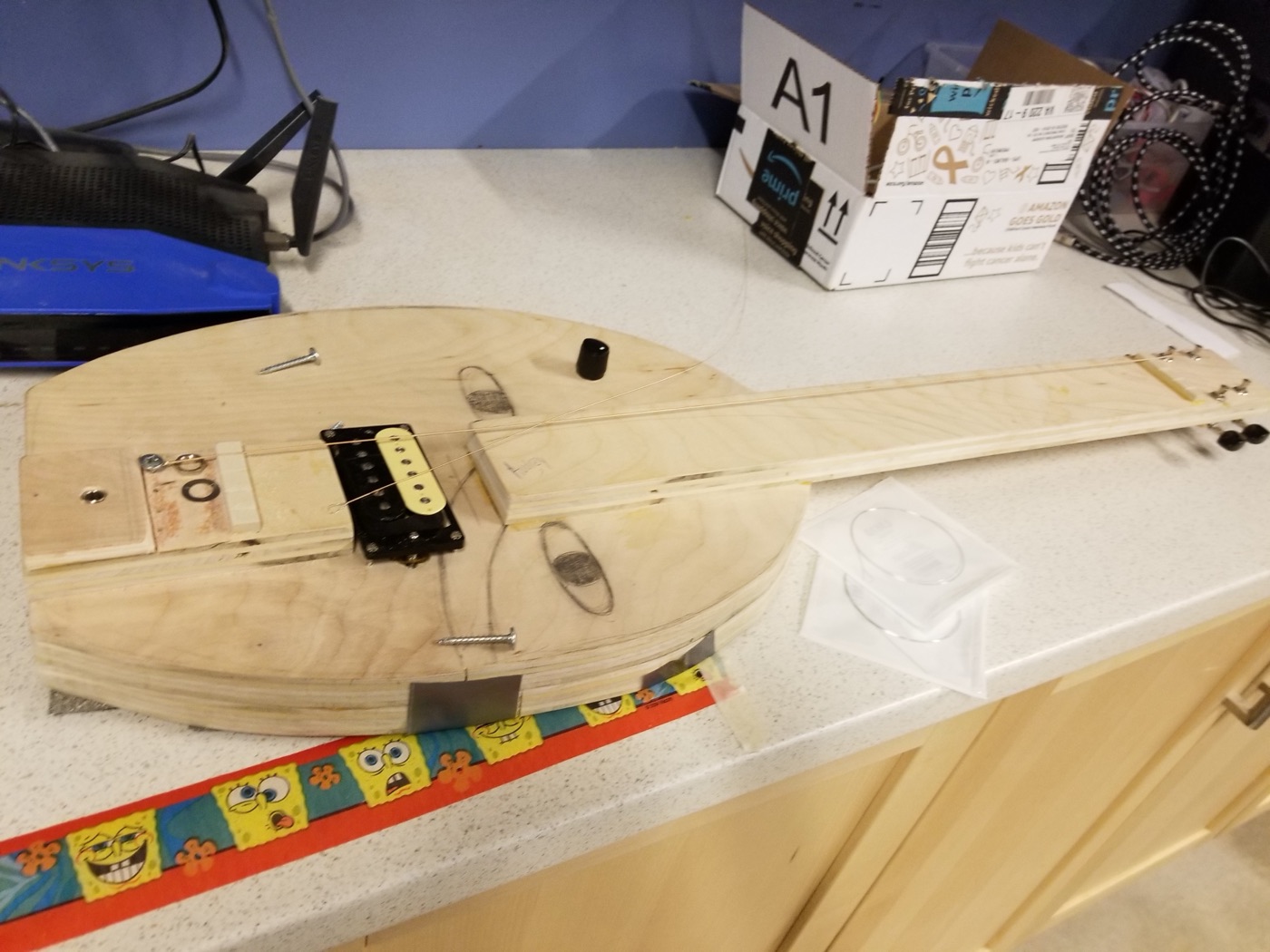
The Lemongrab guitar
An electric guitar I built, shaped like Lemongrab from Adventure Time: a wooden body and neck I cut and assembled, with a real pickup and a volume knob.
The Shoebox
My own Google Home: a music-focused voice assistant built on Google's AIY Voice Kit and a Raspberry Pi. Ask for an artist, an album or a song and it finds the track in its own library, indexed at startup from each file's name. Each side of the box is my drawing of a favorite album cover. Its planned personality, per my design sheet: Mean. Code


# real responses from its code (asked on a Wednesday)
you> play music
box> Would you like to play from an artist, play an album, or a specific song?
you> what day of the week is it
box> It is wednesday my dudes.
box> REEEEEEEEEEEEEEEE
[button pressed]
box> ow! Stop it, you FOOL.
The Row-Bot
My 8th-grade math independent project: an AI in Python that plays the board game Ducks in a Row, using minimax with alpha-beta pruning, to find how far it must look ahead to beat a human consistently. With about 30 legal moves per position, five moves of look-ahead means over 24 million positions; on the computer I had, anything past three took 15+ minutes a move, and capped at three it lost about half its games to experienced players.
Games
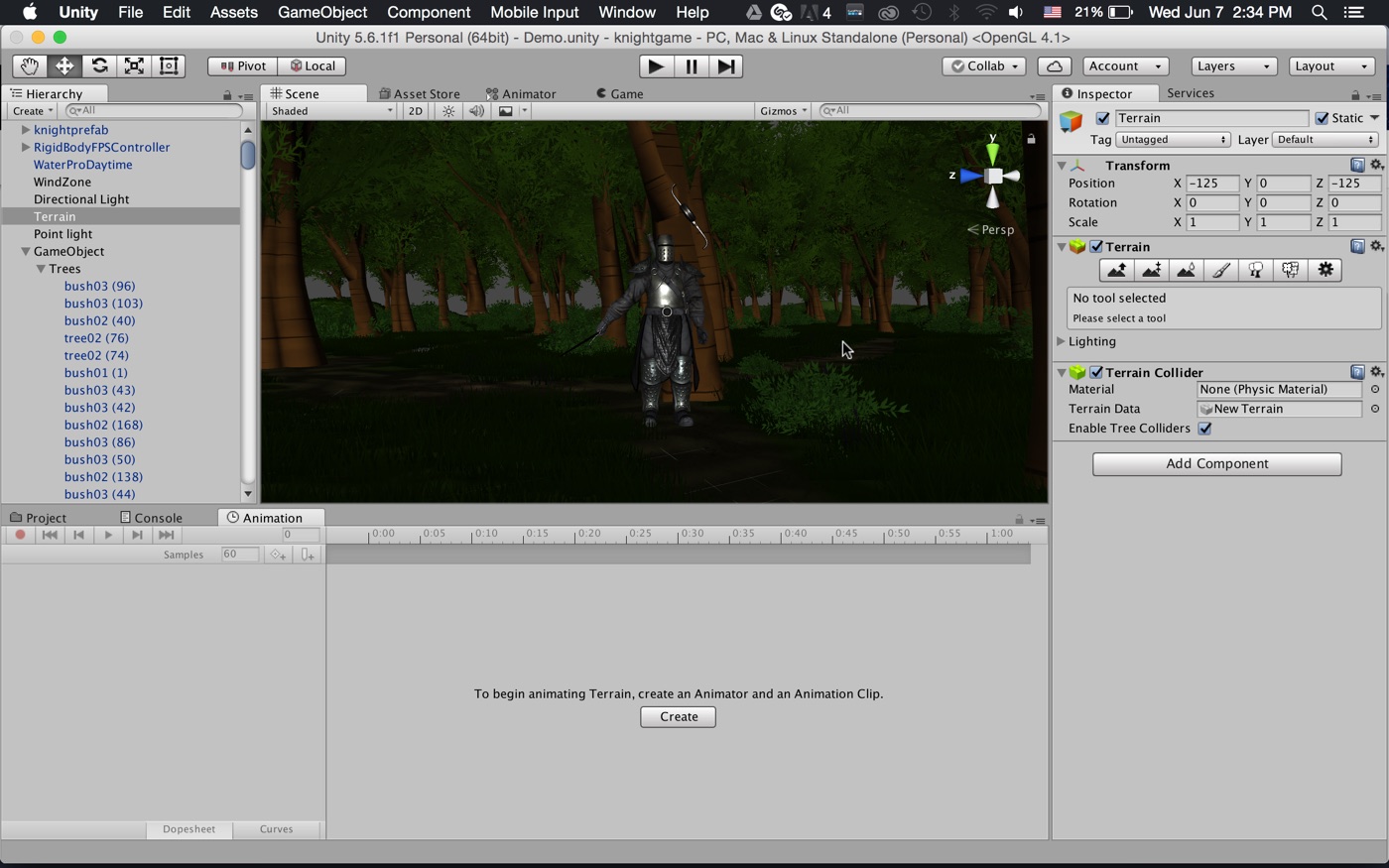
Black Knight Simulator, a Monty Python homage in Unity and C#: to win, you sever all the Black Knight's limbs. Most of the work went into the forest and animating the knight myself, since the model came without any animations. Salamander Lord of All Recorders, an Android game in MIT App Inventor: play the right song on a virtual recorder to please the Salamander Lord, who teleports around the screen, with a trip to Flavortown hosted by Guy Fieri. It was one of about ten apps I made, alongside Space Invaders, Frogger-but-a-turtle, Bop It, a Halloween soundboard, and Plane Scroll, a Flappy Bird-style game with bugs worth 5 or 15 points. In Game Maker I made arcade games of my own and wrote GML for Fools, a tutorial for its programming language. For a bonus math project I designed a game of my own, Royal Four.
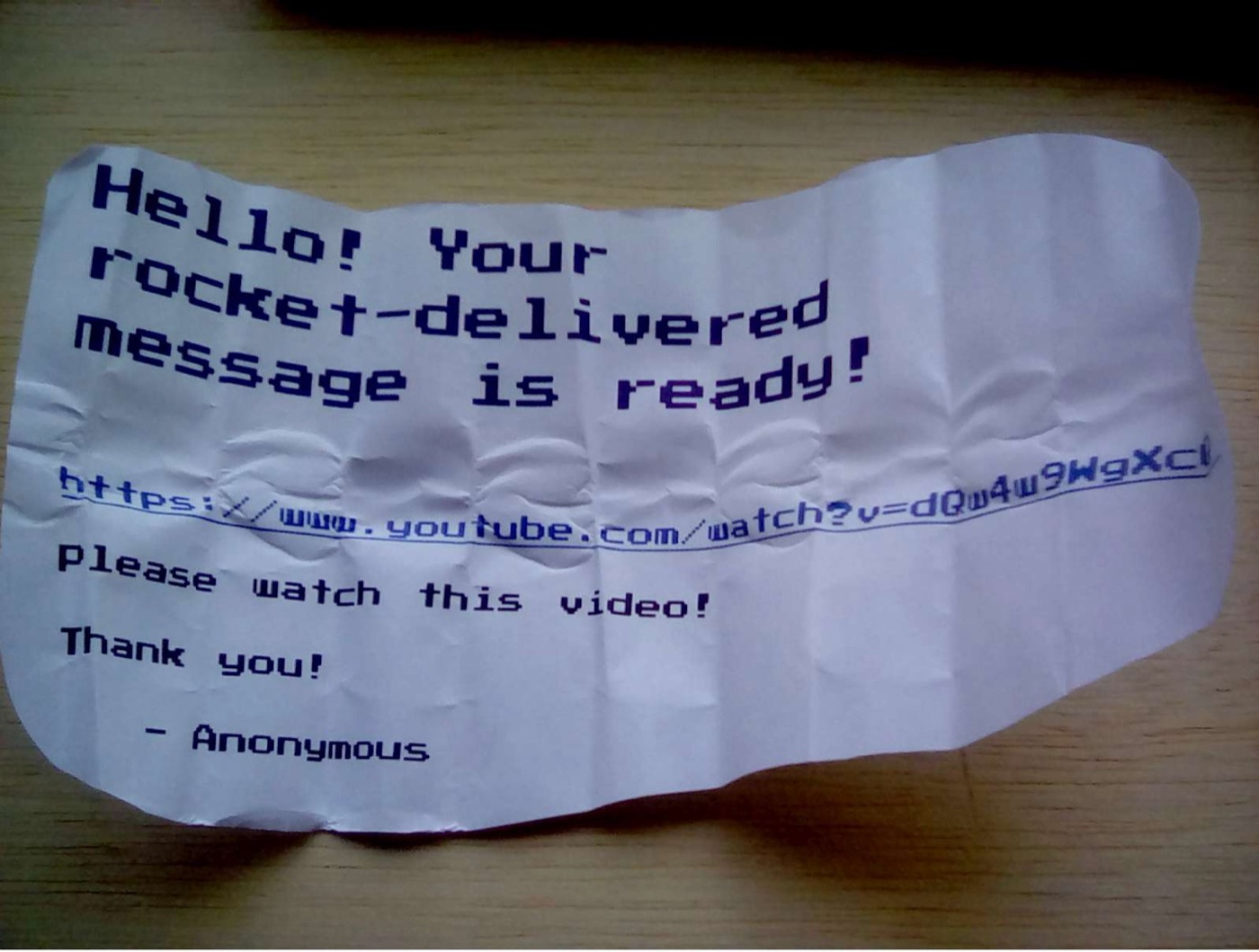
A model rocket with a mission
Two rockets in aerospace engineering, one from a kit and one my own design. Mine was built to drop a fun, lightweight payload into the yard of someone unlucky: a folded note announcing their rocket-delivered message, which linked to a certain Rick Astley video.


Art and math
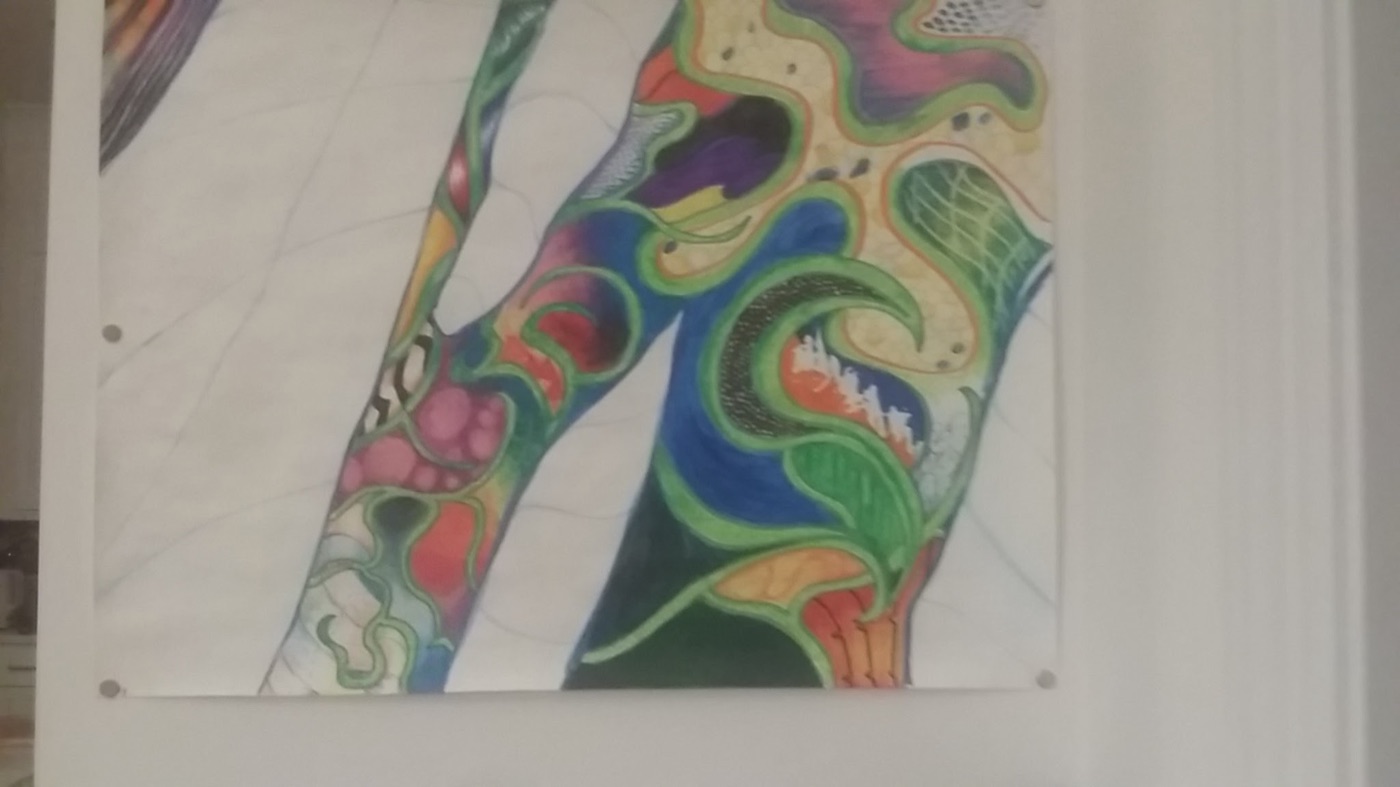
A colored golden spiral (my second independent math project, after a kids' book about the order of operations), and a negative space illustration from art class.

- Music: my first arrangements for flute choir and quartet, and originals like a soundtrack for a text-based horror game I made. They're on the Music page.
- Short stories I wrote on my own because I wanted to:
- New Life Project: a failed experiment is saved from the lab by a scientist with too much conscience. He struggles to understand himself in despair and confusion. Is he too flawed to survive?
- Lil' Jim Jam's Big Adventure: two boys have their time stolen from them by the evil conductor of a magic train, and are left as "adults" in the future. Thus begins the search for the best years of their lives.
- Mr. Fish: once he achieves his dreams, Mr. Fish is left with a dark feeling of hopelessness that tears him apart slowly.
- Yo Duh Life: Lucy is going insane, or so she thinks. Strange human-shaped beams of light visit her dreams, singing songs of yo duh and dancing dances of yo duh. They are trying to send her a message, more disturbingly bloodthirsty than she ever imagined. To listen to Yo Duh, or to shun Yo Duh?
- Yalli Smay: The Parallel Night (2016–?): an unfinished space-empire saga that opens on Yalli Smay surveying the forest he has just burned, "as an artist would survey a masterpiece," while his frightened soldiers salute.
- We've Been Paid a Visit: a man shows up making outrageous claims. He says he's from the future, 2117 to be exact, nearly 100 years from now.
- Top 3 Reasons There Are People Living in Your Home Right Now: Cecil Ree is a useless human being. His parents, sick of him freeloading well into his twenties, kick him out, and on his travels he meets a mysterious and ridiculous man named Tyler.
- 8:45 PM: an interactive story in Twine. Mr. Fish is in the waiting room, and you have to help him escape. Twenty passages, one of them the "psychopath route."
- Stuck-Up SMAYs Weekly Digest: a fake celebrity tabloid. This week at the Grand Prix brunch, everything tastes awful, and Jay-Z tells Jerry Seinfeld to shut up for once in his life.
- The Tale of Brick
- Whist: an original short story about the card game whist. It's now lost.